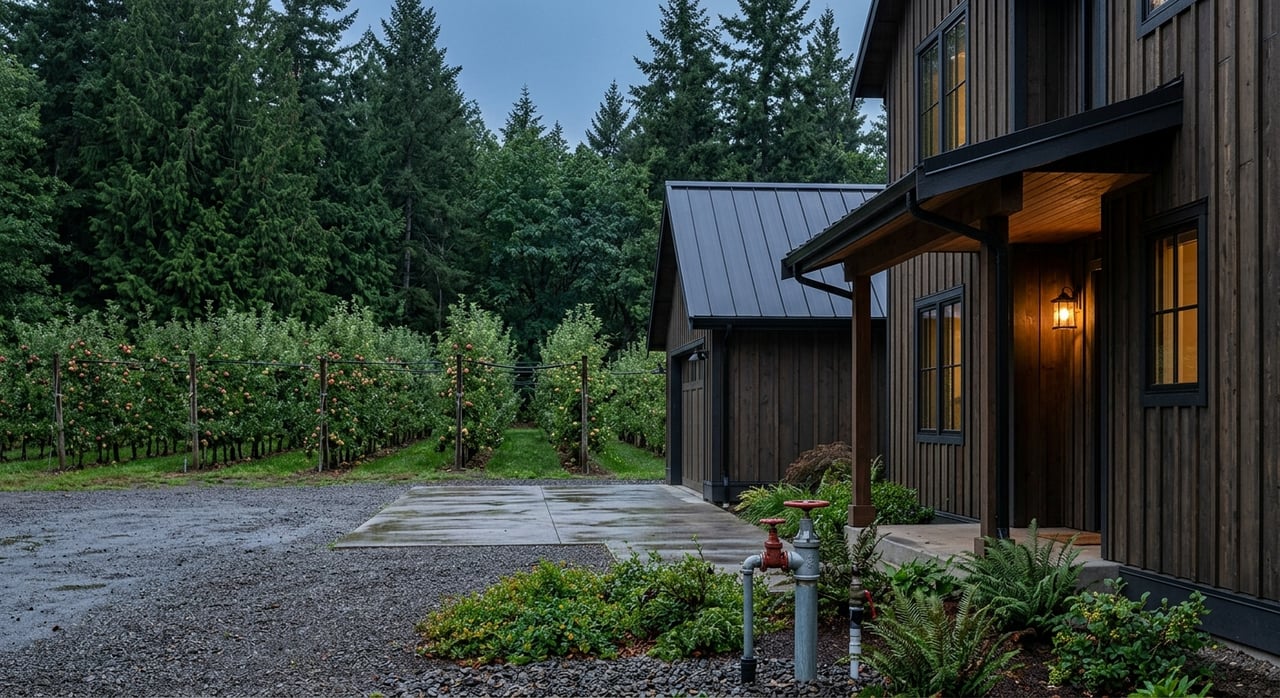
If you are drawn to the Wenatchee River valley, one question can shape your entire home search: do you want to live by the water or on the land? In the Peshastin, Dryden, and Monitor corridor, both options offer a strong lifestyle pull, but they function very differently day to day. Understanding those differences can help you focus your search, ask better questions, and avoid surprises once you get serious about a property. Let’s dive in.
Why this corridor feels so distinct
Peshastin, Dryden, and Monitor sit along the Wenatchee River in Chelan County, creating a corridor where river access, open valley views, and agricultural land all shape the feel of the area. This stretch includes year-round public river access points maintained by Washington Department of Fish and Wildlife at Peshastin, Lower Dryden, Dryden Dam, and Lower Monitor.
You also have nearby outdoor landmarks that help define the setting, including Peshastin Pinnacles State Park, a 34-acre day-use park known for hiking and wide views of the valley and orchards. Altogether, the area offers a mix of recreation, rural land patterns, and scenic value that appeals to buyers looking for a lifestyle property near Leavenworth.
Riverfront living basics
If you picture morning river views, quick access for floating or fishing, and a setting that feels closely tied to the Wenatchee River, riverfront or river-adjacent property may be what you want. In this corridor, that lifestyle tends to be more practical and nature-focused than polished or marina-style.
The public access sites in the area reflect that pattern. Peshastin has a hand launch, Dryden Dam allows hand launching below the dam, Lower Monitor has an unimproved launch, and Lower Dryden has restrooms but no boat launch. That tells you a lot about the local river experience: it is centered more on simple put-ins, fishing, and floating than on large private shoreline infrastructure.
What river access really looks like
For many buyers, "riverfront" sounds like constant, direct recreation from the backyard. Sometimes that is true, but in this corridor, you should not assume every river-adjacent property comes with easy launch conditions or built improvements along the water.
A better way to think about it is this: the river is often the main visual and lifestyle feature, while recreation may still depend partly on nearby public access points. If being close to the water matters more to you than having a large, improved shoreline setup, this can be a great fit.
Floodplain review matters
River proximity also comes with more site-specific planning. Chelan County requires a Floodplain Development Permit before work in the 100-year floodplain or special flood hazard area, and county guidance notes that even smaller projects may require review.
That can include outbuildings, some fences, driveway culverts or bridges, grading, and long-term storage of equipment or materials. So if you are comparing a river parcel to an upland property, you are often weighing beauty and access against a more detailed permitting path.
Orchard living basics
If your ideal property gives you more usable ground, room to spread out, and flexibility for rural improvements, orchard or small-acreage living may feel like a better match. In this part of Chelan County, the agricultural landscape is not incidental. It is a core part of how the area functions.
The City of Leavenworth comprehensive plan states that the Peshastin Irrigation District serves about 3,700 acres along the west side of the Wenatchee River. Those irrigation deliveries primarily support pear and apple orchards, which helps explain why so many parcels here are tied to productive land use and water delivery systems.
Irrigation is central to the lifestyle
A key difference between orchard living and standard residential living is that the land often depends on irrigation. A Wenatchee River Basin planning note says much of central Washington receives less than 20 inches of rain annually, so irrigation is not just a bonus. It is fundamental to how orchard ground is used.
For you as a buyer, that means irrigation service or agricultural water arrangements should be part of your early due diligence. If the land is one of the main reasons you are buying, understanding how water supports that land is essential.
Parcel sizes can vary a lot
This corridor includes a broad range of parcel sizes. Chelan County assessor records show examples from smaller Peshastin lots of 0.22 and 0.34 acres to agricultural tracts of 7.12 and 46 acres.
That wide spread is important because "orchard area" does not always mean a large working farm. You may find compact residential lots, modest small-acreage holdings, or larger tracts with room for drive lanes, irrigation-related improvements, and other accessory uses.
Riverfront versus orchard living
When buyers compare these two property types, the biggest tradeoff is usually water access versus land utility. One emphasizes immediate river setting. The other emphasizes how you can use the ground.
Here is a simple way to frame the difference:
| Lifestyle focus | Riverfront or river-adjacent | Orchard or small acreage |
|---|---|---|
| Primary draw | Close river setting | More usable land |
| Recreation style | Floating, fishing, quick river access | Land-based use and rural flexibility |
| Property planning | More flood-aware review | More irrigation and land-management questions |
| Improvements to review | Floodplain-related permitting | Outbuildings, land use, and tax treatment |
| Best fit for buyers who want | Water-centric living | Ground-centric living |
Neither choice is better across the board. The right fit depends on how you want to spend your time and what you expect the property to do for you.
Questions to ask before you tour
In this corridor, a beautiful listing photo rarely tells the full story. A river view, a patch of orchard ground, or a broad flat parcel can each come with important details that affect long-term usability.
Before you tour, it helps to confirm a few basics:
- Whether the parcel is in a flood hazard area
- Whether the property is enrolled in current use
- What irrigation service or agricultural water arrangement exists
- Whether river recreation would come directly from the property or from nearby public access sites like Peshastin, Lower Dryden, Dryden Dam, or Lower Monitor
These questions can quickly clarify whether a home matches your goals or only looks good at first glance.
Current-use status can affect taxes
If you are looking at orchard ground or acreage, you may also run into properties enrolled in Chelan County’s current-use program. The county says this program can reduce assessed value for qualifying open-space, commercial agricultural, and forest land.
There is an important distinction, though. The benefit applies only to the land, not to improvements or structures. So if you are thinking about a shop, barn, or another outbuilding, the tax conversation and the permitting conversation may not line up the same way they would on a standard residential lot.
How to choose the right fit
If you keep getting pulled toward the river, pay attention to that. Riverfront ownership in Peshastin, Dryden, and Monitor often suits buyers who want immediate proximity to the Wenatchee River and are comfortable with flood-aware planning and permit constraints.
If you keep talking about elbow room, land use, or support space for rural living, orchard or small acreage may be the stronger fit. These properties tend to appeal to buyers who want more usable ground, irrigation-supported use, and flexibility for outbuildings or farm-support space, while accepting the responsibilities that come with more land.
In other words, the choice usually comes down to what you want the property to center on. If the river is the star, start there. If the land is the star, orchard living may serve you better.
Why local guidance helps here
This is one of those markets where two properties can look similar online but function very differently once you dig into access, parcel layout, floodplain status, irrigation, or current-use enrollment. That is especially true for out-of-area buyers who are trying to compare lifestyle value with practical property realities.
Working with a local team who understands recreational property, acreage, and rural due diligence can help you narrow the field faster. It also helps you spend time touring properties that truly fit the way you want to live in the Leavenworth area.
If you are weighing riverfront versus orchard living in Peshastin, Dryden, or Monitor, Lynn Stoddard can help you sort through the tradeoffs and find the property that fits your goals.
FAQs
What is the main difference between riverfront and orchard living in Peshastin, Dryden, and Monitor?
- Riverfront living usually centers on immediate proximity to the Wenatchee River, while orchard or small-acreage living usually centers on usable land, irrigation, and rural flexibility.
What should buyers verify about flood risk in the Peshastin-Dryden-Monitor corridor?
- Buyers should confirm whether a parcel is in a flood hazard area because Chelan County requires a Floodplain Development Permit for work in the 100-year floodplain or special flood hazard area.
What does river recreation look like in the Peshastin, Dryden, and Monitor area?
- River recreation in this corridor tends to focus on floating, fishing, and simple put-ins, with public access sites at Peshastin, Lower Dryden, Dryden Dam, and Lower Monitor.
Why is irrigation important for orchard properties near Leavenworth?
- Irrigation is central because the area’s agricultural land relies on delivered water, and much of central Washington receives less than 20 inches of rain annually.
Do orchard-area parcels in Peshastin and Dryden always mean large farms?
- No. Parcel sizes in the corridor range from smaller residential lots to much larger agricultural tracts, so the property type can vary quite a bit.
How does current-use enrollment affect property taxes in Chelan County?
- Chelan County says current-use benefits can reduce assessed value for qualifying land, but the benefit applies only to the land and not to improvements or structures.